

Nothing on a numbered canvas is permanent. Acrylic dries opaque, so almost any mistake can be painted over once it is dry.
Still, there are about ten things that go wrong often enough to be worth knowing in advance. Most of them cost you an evening rather than a canvas, and all of them have a fix that takes one sentence to explain.
Here they are, in roughly the order you will meet them.
Starting in the wrong place on the canvas

The instinct is to start with the part you are most excited about, which is usually the detailed bit in the middle.
Start with the largest shapes instead. Sky, water, a wall, a plain background. They go quickly, your hand learns the brush on an area where small errors do not show, and the canvas stops looking intimidating once most of it is covered.
Within a section, work from the top of the canvas down, so your wrist rests on bare or dry canvas rather than on paint you laid five minutes ago.
Painting dark colors before light ones

Work from your lightest color toward your darkest.
If a light color strays past a line, the dark color that comes later covers it completely. Go the other way and you are trying to hide dark paint under a pale coat, which leaves a gray shadow no matter how many coats you add.
The exception is a design where a dark background surrounds pale detail. There, paint the background first so you have a clean edge to work the pale shapes up against.
Overloading the brush

Dip only the tip. A brush loaded to the middle drips, floods the shape, and pushes a ridge of wet paint over the line into the next one.
Worse, the paint that creeps up into the base of the bristles dries there and splays the brush within a couple of sittings.
Wipe one side of the brush on the rim of the pot before you touch the canvas. When the stroke starts to drag, reload rather than pressing harder.
Jumping between colors

Opening a new pot for every shape in front of you means rinsing the brush forty times an evening and leaving six pots open while you do it.
Work one color at a time instead. Open one pot, find every shape on the canvas with that number, paint all of them, close the pot and rinse once.
The picture appears in patches rather than in one corner, which takes some getting used to, and the last few colors go remarkably fast.
Leaving pots open

An open pot of acrylic starts skinning over in about twenty minutes on a warm evening.
Close every pot the moment you finish with it, and press the lid until you feel it seat. If you are stopping mid shape, close it anyway.
Thick paint tempts people to water it down, and that is where the second mistake hides. A single drop, stirred in with the handle end of a brush, is the whole fix. Pour water in and you get a pot that no longer covers anything.
A pot with a solid skin on top is often still fine underneath. Lift the skin out in one piece rather than stirring it in, because stirred lumps end up as bumps on the canvas.
Working in light that is too dim

This is the quiet one. People blame their eyes, their brush or the kit, when the real problem is a lamp in the wrong place.
Paint by numbers is close work with small print. You want a bright light coming over your shoulder onto the canvas, not from behind the canvas into your face, and not from overhead where your own hand shadows the shape you are painting.
A desk lamp you can angle costs very little and fixes all of it. Colors read true, numbers stay readable, and you stop squinting after twenty minutes.
Not checking the kit against the canvas first

Five minutes at the start saves a lot of hunting later.
Lay everything out. Check that every number you can see on the canvas has a matching pot, and that every pot has a readable number on it. Stir each pot before its first use, because acrylic separates and the first brush into an unstirred pot picks up mostly water.
Keep the reference picture where you can glance at it without moving the canvas. If anything is missing, you want to know on day one rather than on the evening you reach for it.
Trying to fix paint while it is still wet

A stray mark, a blob, a color in the wrong shape. The instinct is to wipe it, and wiping turns a small mark into a smear three times the size.
Wait. Let it dry completely, which takes about twenty minutes, then paint the correct color over it. Give it two coats if the stray color was darker than the one covering it.
The same goes for going back over a patch that is half dry to make it smoother. Dragging a brush through drying acrylic lifts it into ridges. Leave it, let it dry, and lay one clean coat over the whole shape.
Expecting it to look finished too early

Every canvas goes through an ugly middle. The big easy areas are done, the detail is not in yet, and the painting looks like a flat map of colored regions.
That stage is normal and it is where most abandoned canvases get abandoned. What rescues it is the darkest color and the smallest shapes, and those almost always come last. Shadows and fine lines are what make a flat picture suddenly look like an object with depth.
If you stall there, do one color and stop for the night. The last quarter of a canvas goes faster than the middle half.
Picking a design that was always going to be too hard

The design decides how a canvas goes more than your skill does.
Faces, night scenes, still water with reflections and anything built from hundreds of tiny shapes in close shades are all slow and unforgiving. They are wonderful as a third canvas and discouraging as a first one.
For an early canvas, look for big open shapes, a clear subject against a plain background, and strong contrast between the light and dark areas. Our beginner collection is picked on exactly that basis, and the expert collection is where the dense designs live when you want one.
The other half of this is wanting the picture. You are going to look at it for several weeks, and wanting to see it finished is most of what carries you through the middle.
One mistake that is not really a mistake
Painting slightly outside the lines. Everyone does it, on every canvas, and almost none of it shows from the other side of the room.
Numbered designs are built from shapes that meet each other, so a stray millimeter gets covered by its neighbor sooner or later. Fix the ones you can still see when the canvas is finished and hanging, and leave the rest.
Questions about common mistakes

I painted a shape the wrong color. Can I fix it?
Yes. Let it dry fully, then paint the right color over the top. If the wrong color was darker, give it two thin coats rather than one thick one.
I covered a number before painting it. How do I find out what it was?
Look at the reference picture that came with the kit and find the same shape. The colors around it usually give it away, because numbered designs group colors in runs rather than scattering them.
How do I stop my hand smudging wet paint?
Work top to bottom, and left to right if you are right handed. Rest your hand on a folded sheet of paper towel rather than on the canvas itself.
My canvas keeps curling at the corners while I paint.
Tape it to a board along the blank margin, or weight it flat under heavy books overnight before you start. The framed option skips the problem, because it arrives stretched over a wooden frame and is rigid from day one.
Is there a design that forgives most of these?
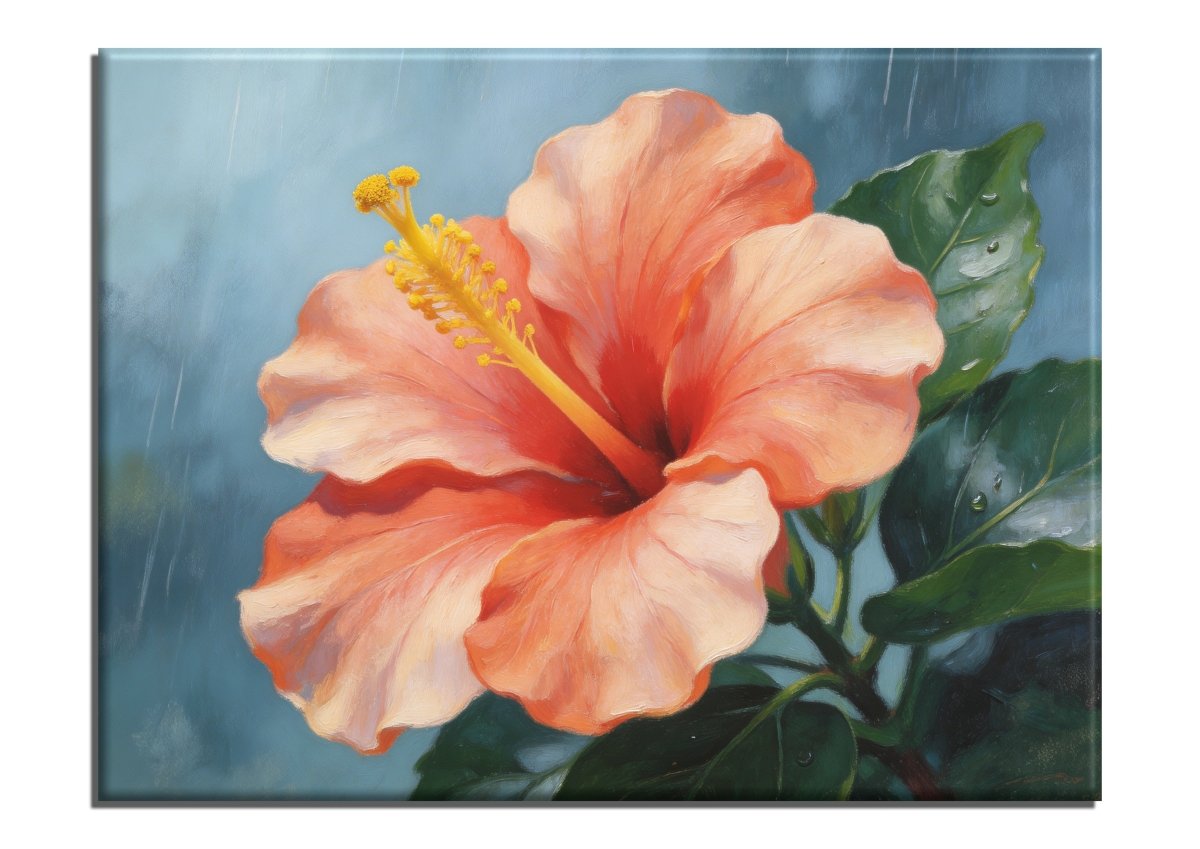
Large flowers and wide landscapes forgive the most, because the shapes are big and the edges are soft. Have a look through the best sellers or the full catalog, and if you would rather paint something personal, a custom kit from your own photo works the same way.


Zostaw komentarz
Ta strona jest chroniona przez hCaptcha i obowiązują na niej Polityka prywatności i Warunki korzystania z usługi serwisu hCaptcha.